Rook Script
A blog about rook script, an alternative writing system for English
Syllable Boundaries
by Reductive Group
There are two major components of spelling in rook script. The second most important is breaking words into syllables, done by placing syllable boundaries. Every syllable has a vowel, so syllable boundaries determine which consonants correspond to which vowels. Syllable boundaries are written with · in standard romanization. For example, the word “biome|bai·oum” has a syllable boundary the only place it could possibly go. The set of consonants in a syllable that come before the vowel is known as the onset. The set of consonants that follow the vowel is the coda. If a consonant is to the left of a syllable boundary, then it is a coda consonant (of the preceding syllable), and to the right it is an onset consonant.
This page briefly overviews the factors to consider when placing syllable boundaries in rook script.
Every syllable should be pronounceable
The first rule of syllable boundaries is that you should not place letters together in a way they can’t be pronounced. For example the word “sigma” has two syllables and needs a boundary between the i and the ə. The only place it can go is between g and m, otherwise one or the other syllable has a cluster /gm/, which is unpronounceable both in onset and coda; thus we have “sigma|sig·mə”.
This rule includes avoiding clusters that are awkward or unwieldy, not just impossible. For example, the name “Magdalene|mag·də·lən” avoids placing gd together in the coda for comfort, although words like “flagged|flagd” show it is perfectly pronounceable.
Some more examples of syllable boundaries determined by this rule alone:
| Latin | romanized rook | rook script |
|---|---|---|
| exchange | eks·cheinj | 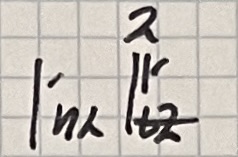 |
| abscess | ab·ses | 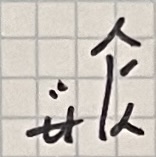 |
| rashly | rash·lii | 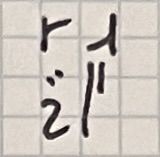 |
| cohort | kou·hourt | 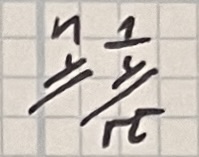 |
| singing | sing·ing | 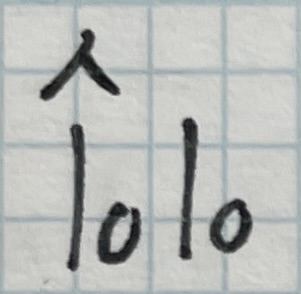 |
| boiler | boi·lər | 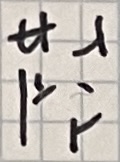 |
| virus | vai·ris | 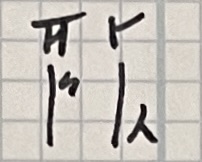 |
| backyard | bak·yaard | 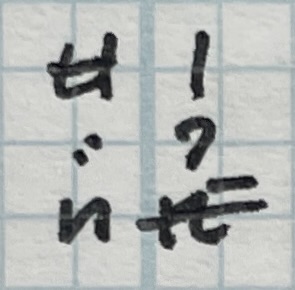 |
Differing sound realizations
The difference between onset and coda can sometimes affect the way a consonant or nearby vowel is pronounced. This is most noticeable with the letter t. At the start of words t tends to be pronounced strongly, and at the ends of words it tends to be pronounced weakly (meaning flapped, unreleased, dropped entirely, etc.). Syllable boundaries are chosen within words to reflect this difference within individual syllables: if t is the first letter of an onset it is usually pronounced strong, and if it’s in a coda it is pronounced weak. This way we see a difference between the t of “detail|dii·teil” and the t of “beaten|biit·ən”.
Several consonants also have strong effects on the vowels before them when they appear in the coda, especially r and l. And sometimes pairs of consonants have distinct pronunciations together, especially tr and dr.
Here are some examples of words where placement in onset and coda reflects different sounds made by at least one of the letters.
| Latin | romanized rook | rook script |
|---|---|---|
| butter | bət·ər | 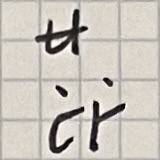 |
| deter | dii·tər | 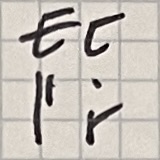 |
| humanity | hyuu·man·it·ii | 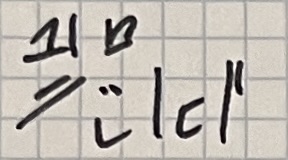 |
| manatee | man·ə·tii | 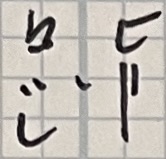 |
| satin | sat·ən | 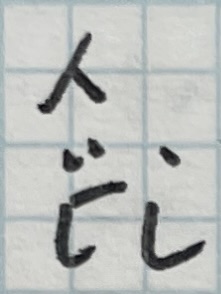 |
| sateen | sa·tiin | 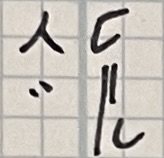 |
| pearl | pər·əl | 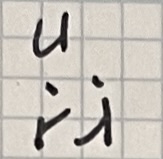 |
| parole | pə·roul | 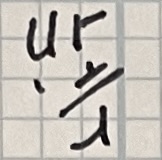 |
| barrel | beir·əl | 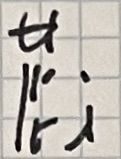 |
| payroll | pei·roul | 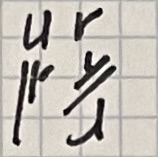 |
| tailor | teil·ər | 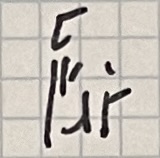 |
| Taylor | tei·lər | 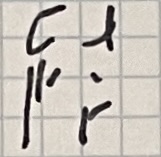 |
| bedraggle | bii·drag·əl | 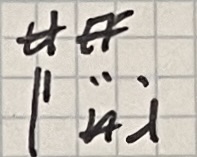 |
| bedrock | bed·raak | 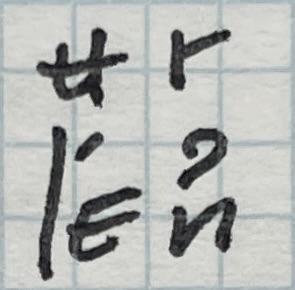 |
Short vowels need codas
Really this is the same principle as the first: it’s awkward to pronounce a short vowel the at the end of a word, and in rook script that is reflected on the syllable level. Officially, however, it’s less important to avoid ending a syllable on a short vowel than to avoid awkward consonant clusters, so the vowel rule has more exceptions.
The vowels that need codas are the short vowels u, i, a, and e. In stressed syllables, the letter ə needs a coda as well, as it represents the short vowel /ʌ/, though in unstressed syllables it represents the weak vowel and does not need a coda. Note that aa does not need a coda, even though its sound is sometimes called “short o”.
Some examples of syllable boundaries determined by vowel checking:
| Latin | romanized rook | rook script |
|---|---|---|
| ledger | lej·ər | 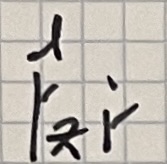 |
| savage | sav·ij | 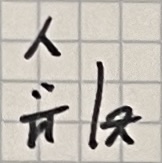 |
| pushy | push·ii | 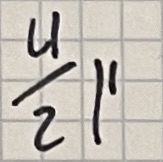 |
| spatula | spach·uu·lə | (Image not available) |
It is possible for a short vowel to be spelled without a coda. Sometimes this happens because that vowel is often pronounced as a weak vowel in practice. Some examples of words where a short vowel lacks a coda:
| Latin | romanized rook | rook script |
|---|---|---|
| litigious | li·tij·is | 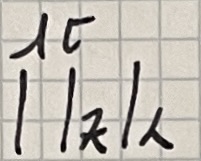 |
| satire | sa·tai·ər | 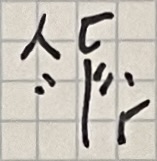 |
| metallic | me·tal·ik | 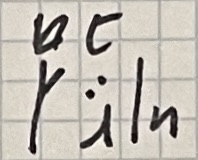 |
| yeah | ya | 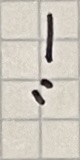 |
Relative stress
In rook script, stressed syllables attract consonants and unstressed syllables repel them. This often aligns with the rules above, but not always. When a completely unstressed syllable is adjacent to a fully or partially stressed syllable, the stressed syllable will usually take as many consonants as possible from the unstressed syllable. When two stressed syllables are adjacent, it’s typically the case that one has heavier stress than the other; in this case there is a preference for the syllable with heavier stress to absorb more consonants, though other syllable boundary rules may conflict. Let’s see some examples.
| Latin | romanized rook | rook script |
|---|---|---|
| basic | beis·ik | 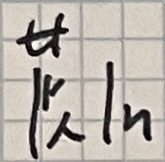 |
| under | ənd·ər | 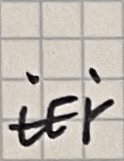 |
| pastry | peis·trii | 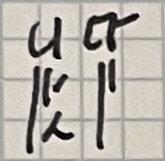 |
| active | akt·iv | 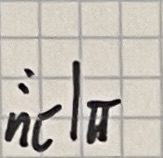 |
| survey (noun) | sərv·ei | 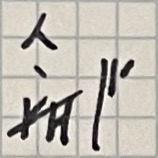 |
| become | bii·kəm | 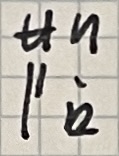 |
| indeed | in·diid | 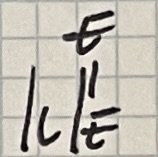 |
| restrict | rii·strikt | 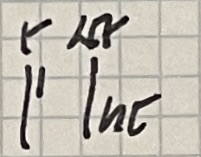 |
| activity | ak·tiv·it·ii | 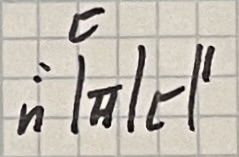 |
| survey (verb) | sər·vei | 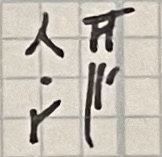 |
Morphology
This is the trickiest consideration. The problem is that in English, it’s difficult to neatly break a word into morphemes. If it were easier, rook script would have a much simpler system for syllable boundaries with morphology as a primary consideration. As it is, the rules above largely attempt to settle most morphology cases by other means. Often, morphology helps when a syllable boundary is underdetermined by considerations above. Sometimes, the syllable boundary corresponding most closely with morphology conflicts with a boundary determined by other means; in these cases rook script attempts to balance the considerations and pick the most reasonable syllable boundary.
| Latin | romanized rook | rook script |
|---|---|---|
| backstroke | bak·strouk | 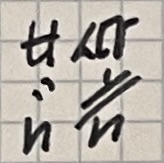 |
| aging | eij·ing | 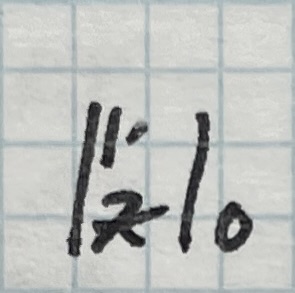 |
| logical | laaj·ik·əl | 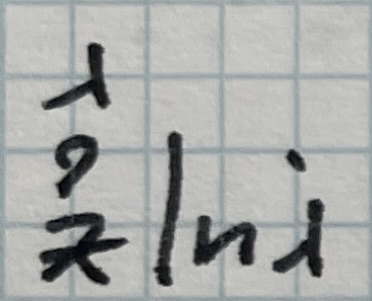 |
| maybe | mei·bii | 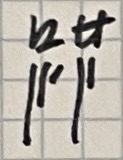 |
Onset maximization
If the above considerations do not determine a syllable boundary, it falls to a linguistic tradition known as the principle of maximum onset. Most of the situations where this applies are between fully unstressed syllables, but there are also proper nouns and some long clusters between pairs of stressed syllables where it is relevant.
| Latin | romanized rook | rook script |
|---|---|---|
| terrible | teir·ə·bəl | 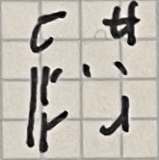 |
| philosophy | fil·aas·ə·fii | (Image not available) |
| company | kəmp·ə·nii | 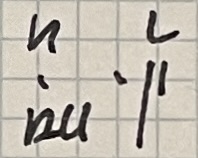 |
Placing syllable boundaries is a bit of an art, so take the considerations above into account when writing, even if you ultimately disagree with the official spelling in the rook dictionary. I would also recommend that you attempt to get an intuitive feel for the decisions made behind official spellings before deciding to forgo them. Then for personal use you may decide to use non-official spellings systematically. For example you may find “registry|*rej·is·trii” makes more sense than “registry|rej·ə·strii” (the official spelling). This is especially true for spellings made to match your own way of speaking as opposed to mine; for example some people consistently flap the /t/ in “relative|rel·ə·tiv” so they may choose to spell it “relative|*rel·it·iv” instead in personal use. For a comprehensive breakdown of such differences in pronunciation, see the guide to adapting rook script.
tags: lesson