Rook Script
A blog about rook script, an alternative writing system for English
Alphabet
by Reductive Group
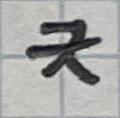
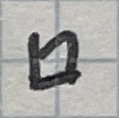
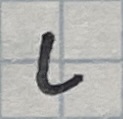
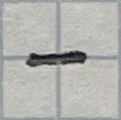
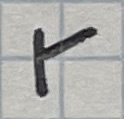
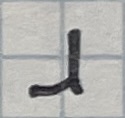
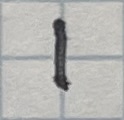
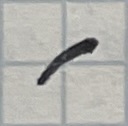
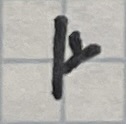
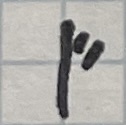
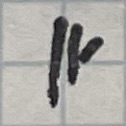
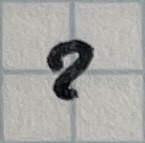
The rook script alphabet consists of 37 letters, 24 consonants and 13 vowels. Each letter corresponds as nearly as possible to one sound in English.
| rook | Latin | IPA | example |
|---|---|---|---|
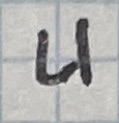 |
p | /p/ | pack |
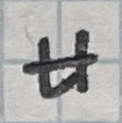 |
b | /b/ | burn |
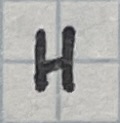 |
f | /f/ | fox, aphid, cough |
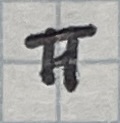 |
v | /v/ | van |
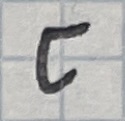 |
t | /t/ | toad, mountain, letter, trick, wrapped |
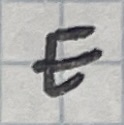 |
d | /d/ | due, drink, body, robbed |
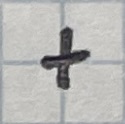 |
th | /θ/ | thick, booth |
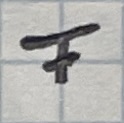 |
dh | /ð/ | that, mother |
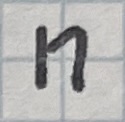 |
k | /k/ | cat, king, quiet |
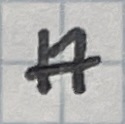 |
g | /g/ | girl |
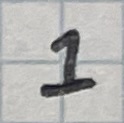 |
h | /h/ | house |
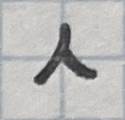 |
s | /s/ | sunk, rice, bats |
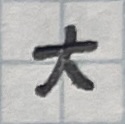 |
z | /z/ | zip, rose, burrs |
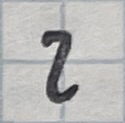 |
sh | /ʃ/ | show, pressure, notion |
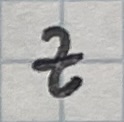 |
zh | /ʒ/ | casual, beige, seizure, equation |
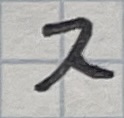 |
ch | /tʃ/ | chirp, feature |
 |
j | /dʒ/ | job, age, educate |
 |
m | /m/ | mole |
 |
n | /n/ | node |
 |
ng | /ŋ/ | song, ink |
 |
w | /w/ | wet, quill |
 |
r | /ɹ/ | round, bird |
 |
l | /l/ | loud, full |
 |
y | /j/ | yes, fjord, ammonia |
 |
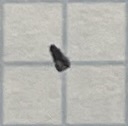
u | /ʊ/ | push, good, could, octopus |
 |
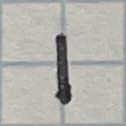
ə | /ʌ/, /ə/ | bump, about, select, edify, comma, mitten, towel, perk, sir, feature, after |
 |
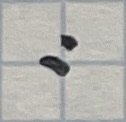
i | /ɪ/ | kid, women, busy, bring, stirring, music, tablet, sausage, nervous, spotted, churches |
 |
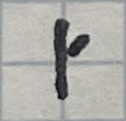
a | /æ/ | sat, hand, laugh |
 |
e | /ɛ/ | wet, head |
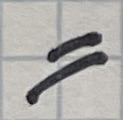 |
uu | /u/ | lute, hoop, youth, tour |
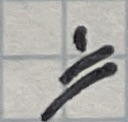 |
ou | /ou/ | rope, grow, dough, bowl, shore, board, war |
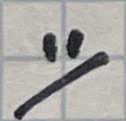 |
au | /au/ | cow, pout |
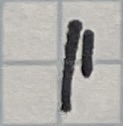 |
ii | /i/ | sheet, saline, happy, event, here, clear |
 |
oi | /ɔi/ | boy, coin |
 |
ai | /ai/ | bike, dry |
 |
ei | /ei/ | plate, great, sail, pang, chair, there, carry, berry |
 |
aa | /ɑ/ | lot, saw, audio, cloth, drama, bald, car, sorry |
Note that the letter(s) used in standard spelling with the Latin alphabet do not neatly correspond to the letters used in rook script. In rook script, spelling is determined by sounds, rather than historical spelling.
You may also find that rook spellings lack distinctions found in the English you’re familiar with. For example, many speakers pronounce the vowels in the words “law|laa” and “lot|laat” differently, but in rook script both are spelled with aa. Rook script was designed with my dialect in mind, and I use the same vowel in both words. Conversely, some speakers may have merged sounds that rook script spells distinctly, as in the words “pen|pen” and “pin|pin”. If you find the spellings unsatisfactory, it is encouraged to adapt them to your needs, especially in personal use.
Finally, note that in rook script some letters may sound different in some words than others. For example, the rook letter t is used in the words “table|teib·əl” and “battle|bat·əl”, though American English speakers usually pronounce the t differently in the two words. Here one letter is used because proficient Anerican English speakers consider them to be instances of a common conceptual sound, or phoneme. The phoneme represented by t in particular has many different realizations, or allophones. One goal of rook script is for spelling to make unambiguous which allophone is most likely in a given word. This is discussed to some extent in the post on syllable boundaries.
In addition to the 37 letters above, rook script has 5 placeholder letters, primarily used for foreign transcription. The IPA values these letters represent are not fixed, since they are not regular parts of rook script writing.
| rook | Latin | IPA | notes |
|---|---|---|---|
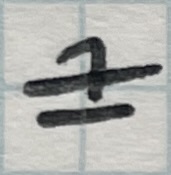 |
voiced h | /ɦ/ | May also be used to represent /x/ or /χ/ |
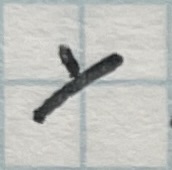 |
o | /ɔ/ | Useful for languages with 5 vowels and length distinction, and in English for speakers without cot-caught merger |
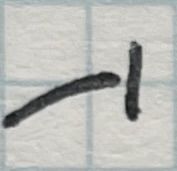 |
iu | /iu/ | |
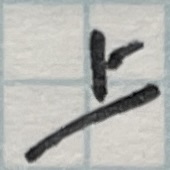 |
eu | /eu/ | |
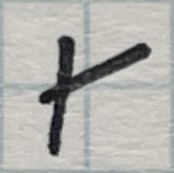 |
ui | /ui/ |